
Blogs · Solution & Industry Insights
AI in logistics does not start with automation, but with understanding
Why successful AI only works when you take the operational reality of logistics seriously
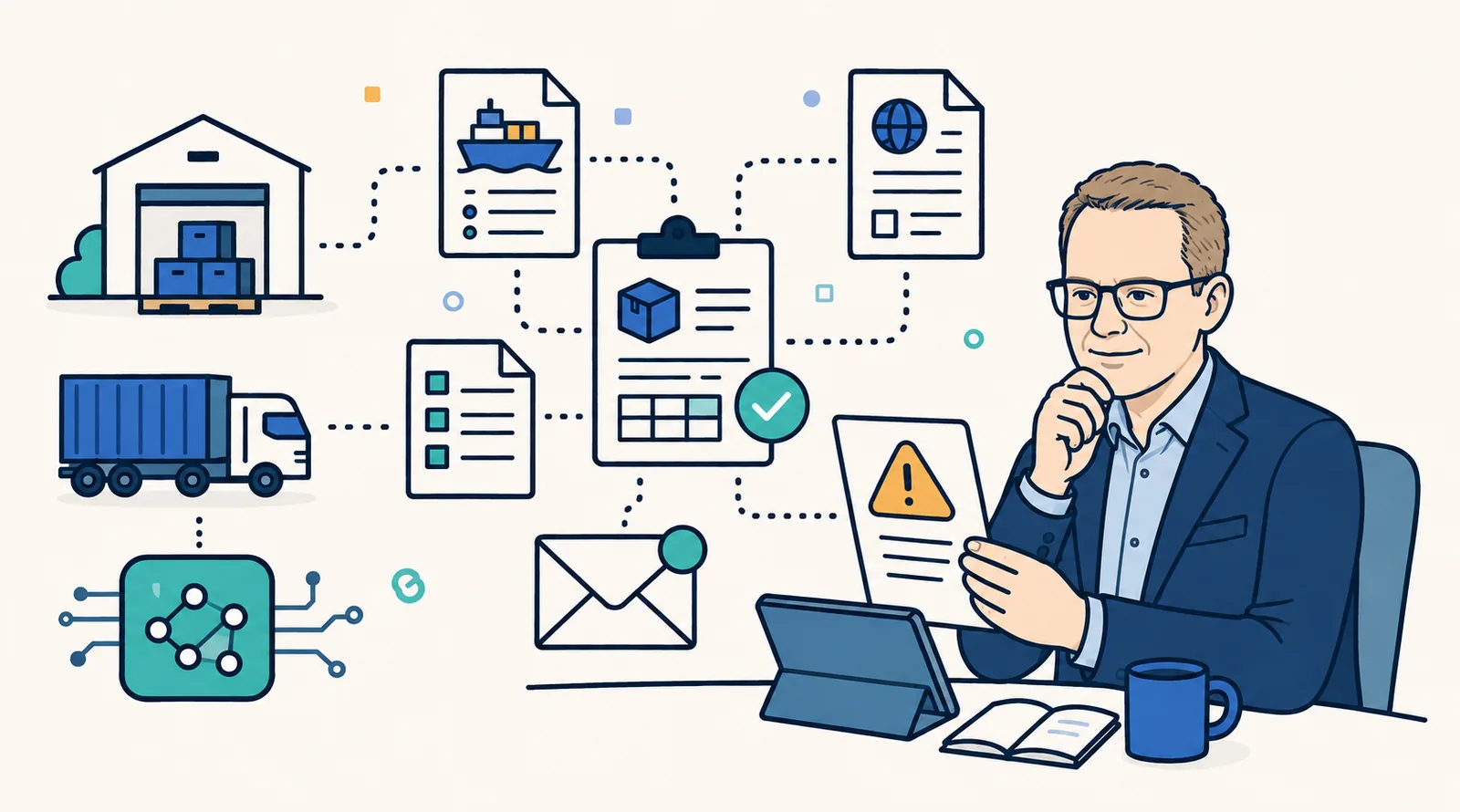
Anyone who has spent time inside logistics organizations quickly realizes that the official process only tells part of the story. Of course, there are TMS systems, ERP systems, customs systems, customer portals, and reports. On paper, the process often looks straightforward. An order arrives, documents are processed, data is verified, and the file moves on to the next step. But the daily reality is richer and often far messier than that.
A lot of work happens between systems. In mailboxes, PDFs, attachments, customer instructions, exceptions, and agreements that originated because daily practice demanded them. That is not due to a lack of professionalism. On the contrary. Logistics runs precisely because of people who hold context, spot patterns, and know when something is off, even when a system does not flag it yet.
That is why, for me, AI in logistics does not start with the question of what we can automate. That question comes too early. The better question is: do we truly understand how the work actually flows? Only when that is clear can you determine where AI adds value, where oversight remains necessary, and where human judgment is essential.
Reality does not fit neatly into a process diagram
In document-driven logistics processes, it is rarely about a single document or an isolated field. An invoice, packing list, CMR, booking confirmation, or customs document only gains meaning in connection with the rest of the file. The question is not just what is on the document, but whether it makes sense within the customer agreement, shipment, route, goods flow, and next step in the process.
That is precisely where things often go wrong when AI is applied too simply. A model can read text and recognize data. That is valuable, but it is not yet a logistics process. The model does not automatically know which documents belong together, which customer always submits files in an unusual way, which fields are compliance-critical, or which exception requires immediate practical attention.
If you only look at the task, you see data entry. If you look at the work, you see interpretation, verification, prioritization, and accountability. That distinction defines how we view AI at DocHeart.
The mailbox is not a side issue
In many logistics organizations, the mailbox is seen as something that should ideally disappear. I understand that, but it is not always the right starting point. The mailbox is often precisely where the operational truth becomes visible. That is where customer agreements arrive, missing documents are requested, exceptions emerge, and context is added that exists in no system at all.
If you want to deploy AI successfully, you have to take that layer seriously. Not by blindly automating everything in the inbox, but by understanding the signals hidden within it. Where do delays occur? Which customers consistently provide incomplete information? Which exceptions keep recurring? What information is repeatedly looked up or copied manually?
There is far more value there than in a generic promise of automation. The real gain comes from bringing visibility to work that is currently fragmented, implicit, and person-dependent.
AI as a controlled operational layer
Our vision is therefore that AI in logistics should not be an isolated tool sitting alongside the process. AI must become part of a controlled operational layer. A layer where documents are recognized, files are compiled, data is prepared, risks become visible, and team members can review decisions where necessary.
This means AI can prepare a substantial amount of work. It can read documents, structure information, flag missing data, perform checks, and propose the next step. But in processes involving customs compliance, financial impact, dangerous goods, customer commitments, or operational deadlines, you do not want AI making invisible decisions. You need to see what a proposal is based on and where human review remains essential.
That is why human-in-the-loop is not a temporary stepping stone for us until AI gets good enough. It is a core design principle. Not because humans should keep checking everything, but because human attention should be applied where context, risk, and judgment intersect.
What this delivers for customers
For customers, this is ultimately not about technology for technology's sake. It is about control. Less searching, less retyping, less rework, less reliance on tribal knowledge, and more traceability in processes that currently hang between inboxes and systems.
The organizations that use AI successfully will not simply be the ones that automate the fastest. They will be the organizations that best understand the work they are actually orchestrating. Where standardization is possible, where exceptions contain valuable insights, and where human judgment should not be eliminated from the process, but better supported.
That is the core of how we look at AI in logistics at DocHeart. AI should not deny the complexity of logistics. AI should help make that complexity manageable.